Environments of Outer Wilds
On Outer Wilds I worked on a whole bunch of stuff, but mainly the large-scale environment terrain and methods involved for making it.
Design team that made the grayboxes: Alex Beachum, Loan Verneau
Art Director: Wesley Martin
Graphics/Tools Engineer that made the fancy shaders: Logan Ver Hoef
Concept art: Saiful Haque, Ian Jacobson
Nomai architecture: Alena Leontyeva, Emily Blatnicky
Environment terrain: Lara Colson, Gus Lambrechtsen
3d artists: Lanaea Bowie, Nicholas Kim
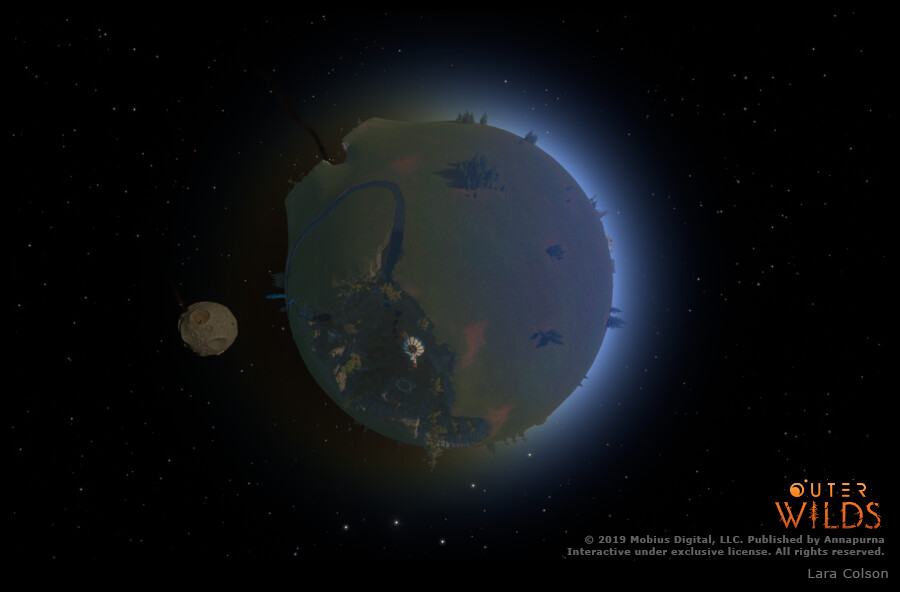
Timber Hearth's challenges involved a lot of walkable, sloping surfaces and cliffside walls that both matched the planet's curvature and worked against it.

Walls were manually placed rock prefabs in Unity, while floors were built in Maya.
An in-editor tool was used to remove unseen or overlapping faces on the cliff walls, reducing polycount and improving performance.

For technical reasons the Quantum Grove crater had walls that curved inwards, so the rock prefabs that formed them couldn't just be aligned to the planet's gravity. A lot of rotating was involved.

Comparison between graybox and final.

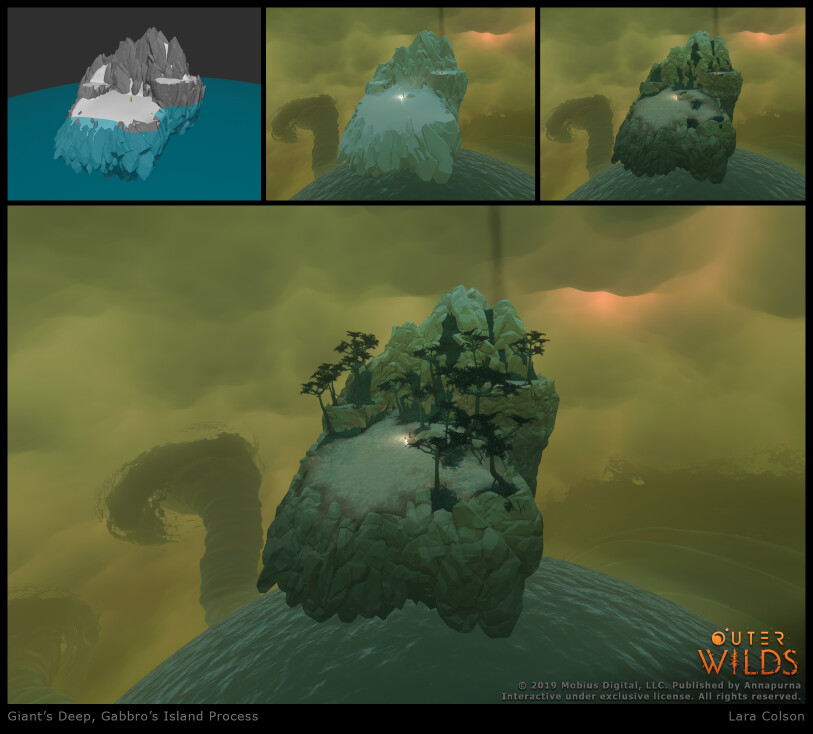
Giant's Deep was worked on before the in-editor tool for optimizing prefab groups was made, so some of the islands were constructed with a combination of ZBrush's decimation tool (for the rocks) and Maya (for walkable areas that needed precision).
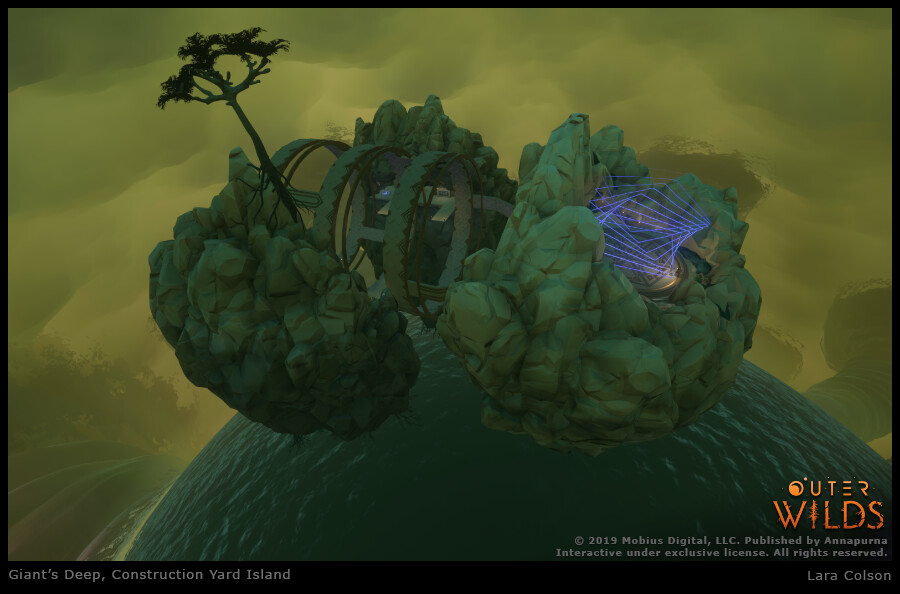

The Statue Island involves a segment where the player walks on a wall, so much of it needed to be placed inside Unity for precision's sake. This island also has a hollow interior area, so careful placement was key.
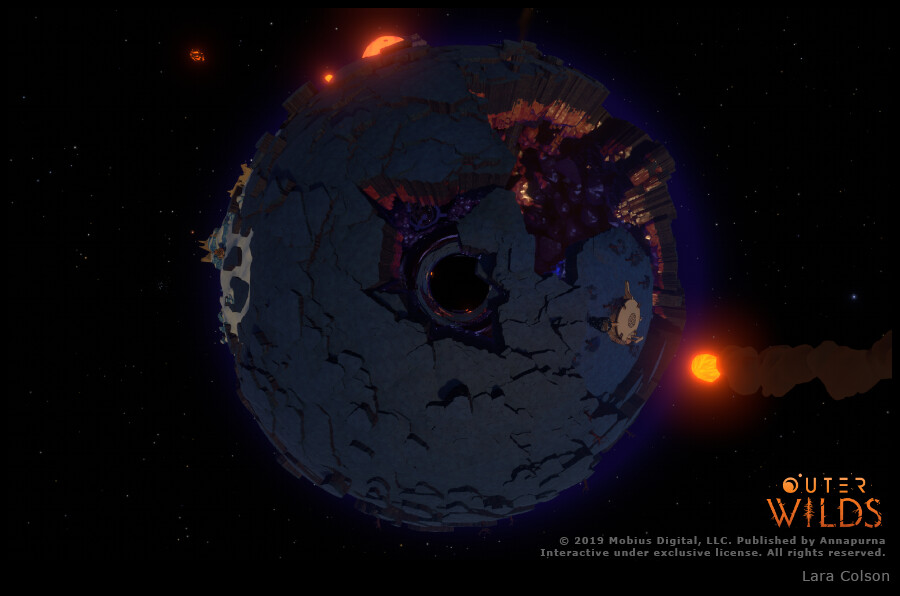
Brittle Hollow is a complicated beast made out of dozens of separate "fragments" that can take damage and break off from the planet. I made the rock and ice kit, many of the terrain textures, and put together most of the rocky surface.

The process for creating a chunk of fragments, from loose graybox, to a map to reference while placing rocks, to the final result.
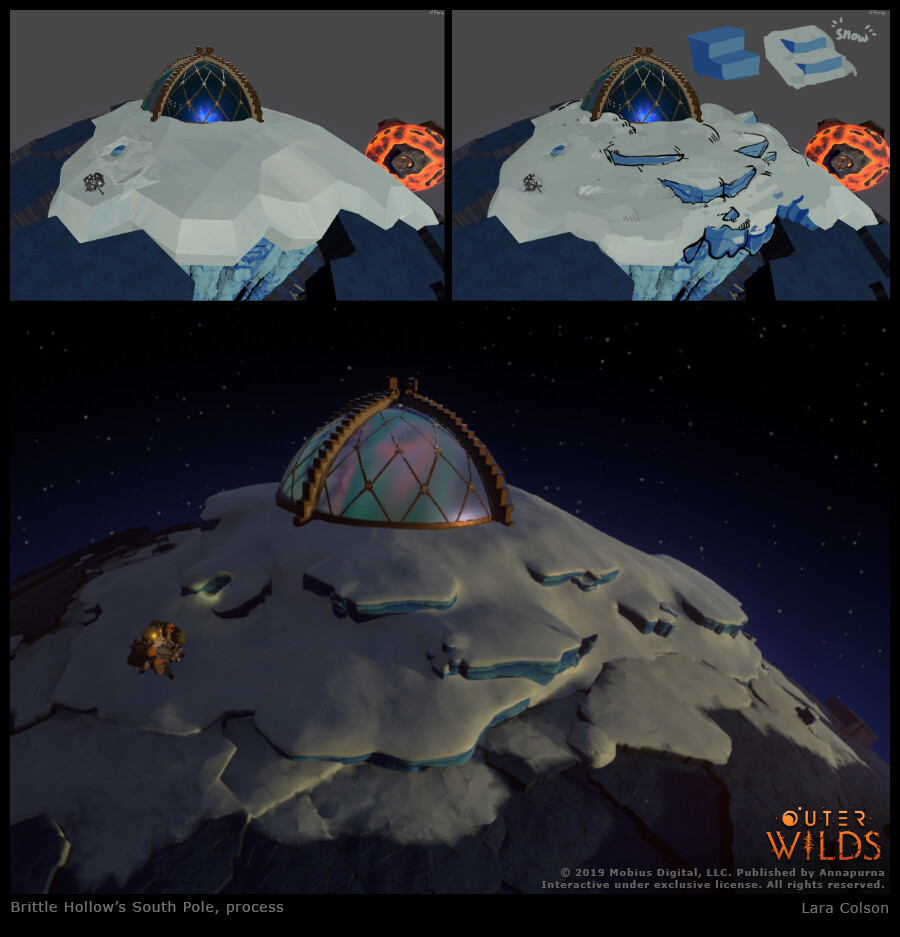
Process from graybox, paintover, final result.

Dark Bramble is a foggy maze with some drastically large-scale assets. I worked on the meshes of the ice chunks, the vine tendrils, the vine textures, and some other small vine pieces.

Many of the textures in Outer Wilds were baked from tiling ZBrush sculpts. The heightmap information was used to add surface detail to the meshes themselves, which was especially helpful for Dark Bramble as its mostly covered in fog.

Example of how the previous tiling texture could be used to quickly author consistent Dark Bramble-esque assets. These would then be decimated to make the low-poly we put ingame.

Most of the vines in Dark Bramble are this one asset. Because it was going to be reused so much, I made sure it looked unique and interesting from as many angles as possible and also broke it up into segments that could be freely rotated or hidden.

For Ember Twin I made the rock kit and terrain textures. The exterior surface was made by me and the interior cave systems were made by Gus Lambrechtsen.
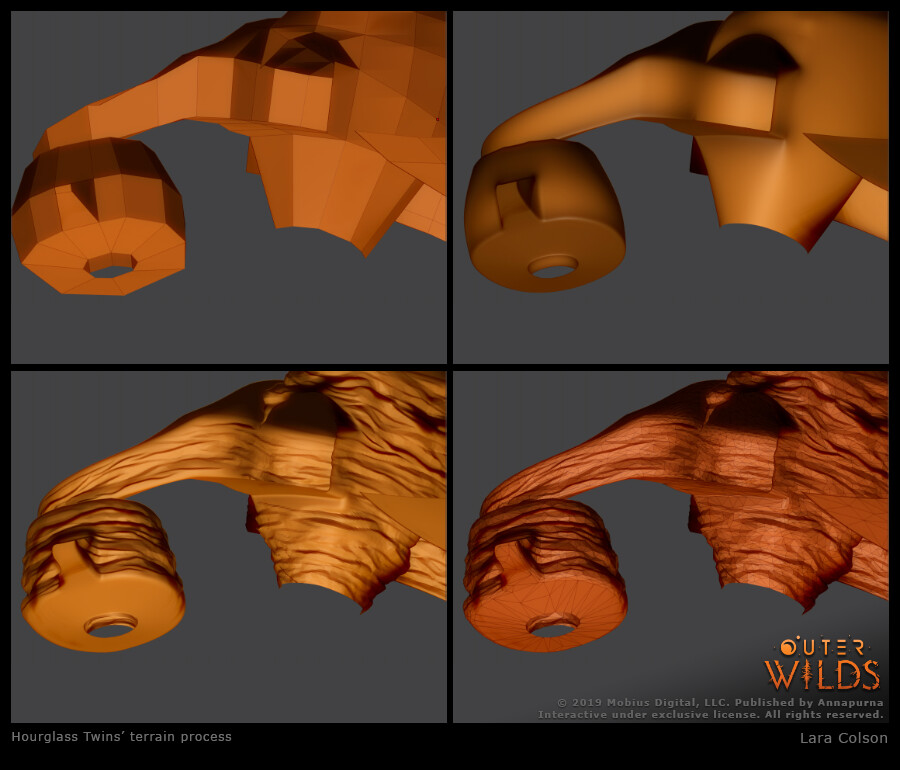
The heightmap method we used for Dark Bramble was heavily used for both the Ember Twin's caves and its exterior canyons. Because of the rising sand levels, the entire planet was very meticulously designed and art had to avoid deviating too far from that.
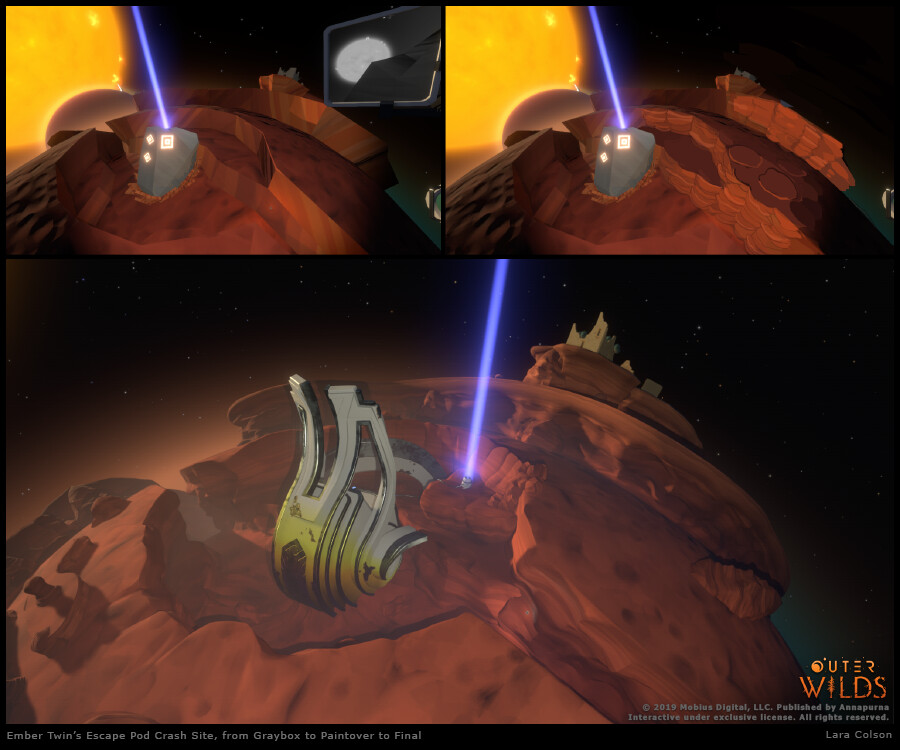
Nomai Escape Pod made by Emily Blatnicky.
Turntable of Ember Twin's southern cave systems. I made the seafoam-green-looking cave, Gus Lambrechtsen made the rest.
From the perspective of a player, most of these paths are just level walking surfaces.